
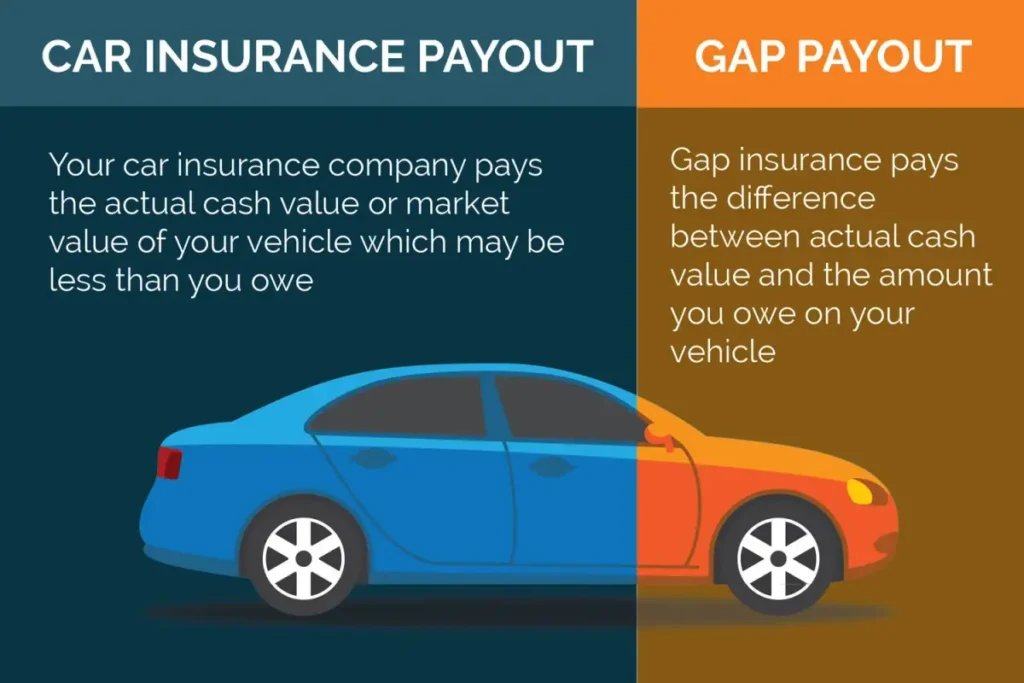
Vehicle GAP coverage, also known as Guaranteed Asset Protection, helps protect buyers from owing money on a vehicle after it is totaled or stolen. It covers the difference between what an auto insurance company pays and what is still owed on the vehicle loan.
Vehicle GAP coverage is a protection product that pays the difference between an insurance payout and the remaining loan balance if a vehicle is totaled or stolen.
This situation happens more often than people expect, especially with today’s longer loan terms and higher vehicle prices.
Why Vehicle GAP Coverage Exists
Auto insurance pays actual cash value, not the loan balance. Actual cash value is based on:
- Vehicle age
- Mileage
- Market value
- Depreciation
Loan balances follow a different path. Early in the loan, most buyers owe more than the vehicle is worth. That difference is known as the gap.
GAP coverage exists to protect buyers from that financial gap.
How Vehicle GAP Coverage Works
If a vehicle is:
- Declared a total loss after an accident
- Stolen and not recovered
The insurance company pays the vehicle’s market value. If that payout is less than the remaining loan balance, GAP coverage pays the difference, up to the program limits.
Without GAP, the buyer is responsible for paying that remaining balance out of pocket.
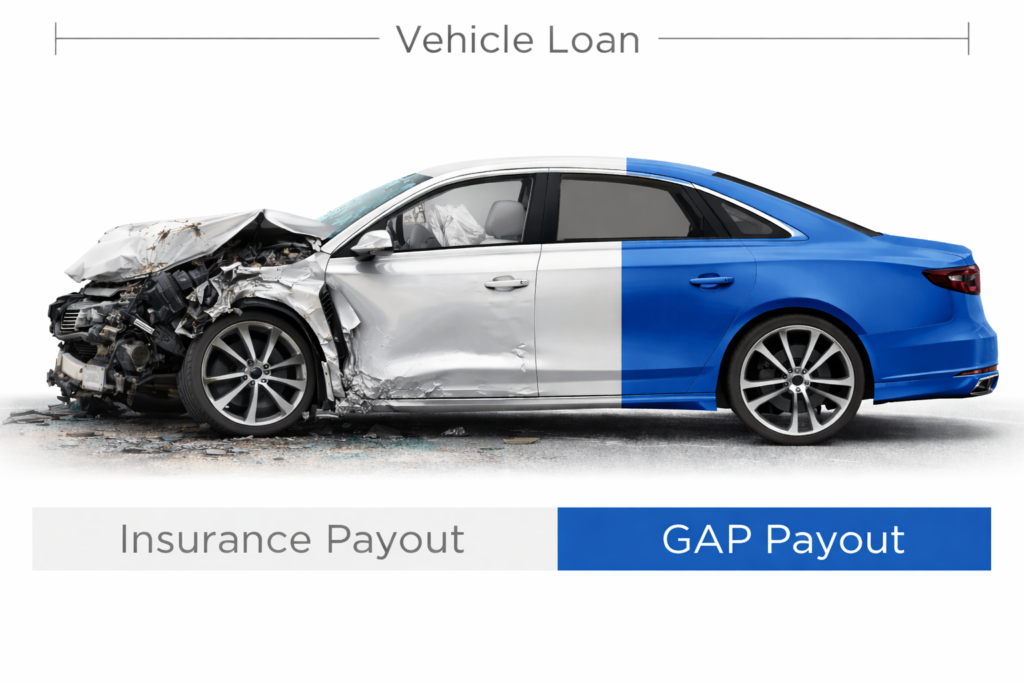
A Simple GAP Coverage Example
A customer finances a vehicle for $36,000.
After one year, they still owe $31,500.
The vehicle is totaled.
Insurance pays $26,000.
That leaves $5,500 unpaid.
GAP coverage pays that $5,500, helping the customer move forward without debt on a vehicle they no longer have.
When GAP Coverage Is Most Important
GAP coverage is especially useful when:
- Little or no money is put down
- Loan terms are 72 months or longer
- Negative equity is rolled into the loan
- The vehicle depreciates quickly
- Most of the purchase price is financed
These conditions describe many auto loans today.
GAP Coverage for New and Used Vehicles
GAP coverage is not only for new vehicles. Used vehicles can carry just as much risk, and sometimes more. Insurance still pays market value, while loan balances may remain high.
Many GAP programs cover:
- New vehicles
- Used vehicles
- Longer loan terms
- Higher finance amounts
Coverage details depend on the program.
What GAP Coverage Does Not Replace
GAP coverage does not replace auto insurance. Comprehensive and collision coverage are still required.
Insurance always pays first. GAP coverage only applies after the insurance settlement if a balance remains on the loan.
Why Dealers Offer Vehicle GAP Coverage
Dealers offer GAP coverage because it:
- Protects customers from financial stress
- Helps prevent credit damage
- Reduces post-sale complaints
- Supports repeat business
- Increases backend profit
When explained clearly, GAP coverage feels helpful, not forced.
GAP Coverage and Long-Term Financing
Longer loan terms increase the chance of negative equity. With 72- and 84-month loans becoming common, GAP coverage plays an important role in protecting buyers during the highest-risk years of the loan.
This is why GAP is often recommended alongside long-term financing.
GAP Coverage for Independent Dealers
Independent dealers often work with used vehicles, longer loan terms, and credit-challenged buyers. GAP coverage helps protect these customers from financial setbacks while helping dealers maintain trust and long-term relationships.
Frequently Asked Questions About Vehicle GAP Coverage
Some GAP programs include deductible coverage, but it depends on the provider. Our GAP covers does covers deductible.
No. GAP coverage is optional, but highly recommended for financed vehicles.
Yes. Many GAP programs cover both new and used vehicles.
No. Insurance pays first, then GAP covers the remaining balance if one exists.
Final Thoughts on Vehicle GAP Coverage
Vehicle GAP coverage protects buyers from one of the most common financial risks in auto financing. It fills the gap insurance does not cover and helps buyers avoid paying for a vehicle they no longer own.
In today’s market of higher prices, longer loans, and fast-changing vehicle values, GAP coverage has become a practical part of responsible vehicle financing.