

EV VSC – Extended Warranty Contracts for Dealerships
Helping dealerships offer EV VSC and EV warranty coverage, including battery protection, as a flexible F&I product.
Why Dealerships Should Offer EV VSC Extended Warranties
Educating EV Buyers on the Value of an EV VSC
As more electric vehicles enter independent dealership inventory, buyers often assume fewer moving parts means less need for protection. In reality, EVs rely on advanced electrical systems, technology, and high-cost battery components, making an EV VSC and EV warranty an important F&I product. Educating EV buyers requires a slightly different conversation—one that focuses on long-term ownership costs, battery protection, and repair complexity—helping customers understand the value of coverage while giving dealerships a better opportunity to protect buyers and strengthen back-end performance.
Understanding EVs vs. Gas Vehicles in the F&I Conversation
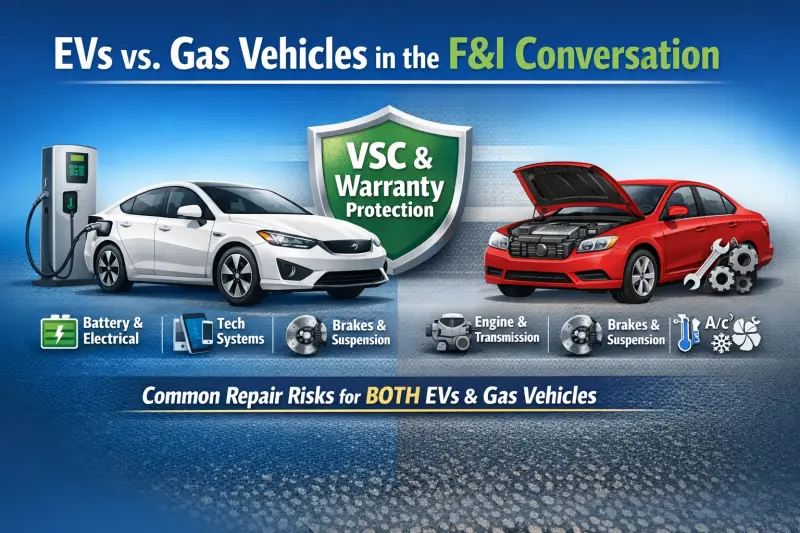
Electric vehicles operate differently than gas vehicles, which means the traditional engine and transmission discussion doesn’t always apply when presenting an EV VSC or EV warranty. However, EVs still share many core systems with gas vehicles, including electrical components, technology, steering, air conditioning, and braking systems—all of which can be costly to repair. Helping EV buyers understand that these risks still exist allows dealerships to present EV VSC coverage as a valuable F&I product that protects long-term ownership costs, not just the drivetrain.
Why EV Repairs Make EV VSC Coverage More Important
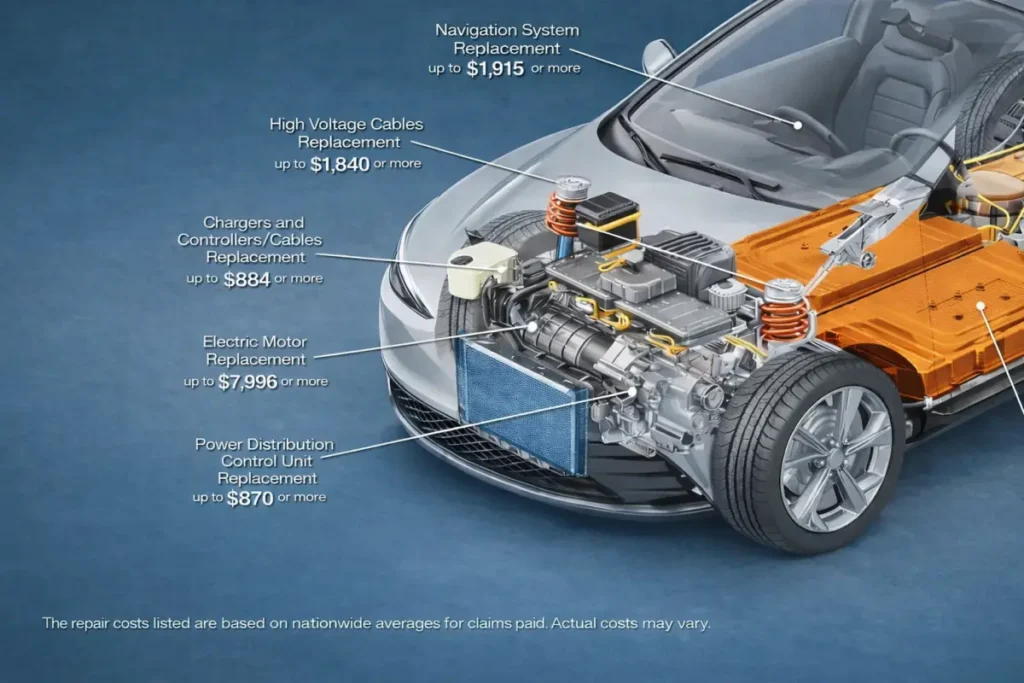
Electric vehicles may have fewer moving parts, but repairing them is often more complex and costly than gas vehicles due to specialized components, manufacturer-specific parts, and the need for trained EV technicians. Many EV repairs involve advanced electrical systems, technology, and climate controls—areas that still represent a large portion of real-world claims. For EV buyers, the risk of unexpected repair costs and limited service options makes an EV VSC and EV warranty a valuable F&I product, helping protect against high labor costs, specialized repairs, and situations where roadside assistance may be needed if battery-related issues arise.
Helping EV Buyers See the Value — and Helping Dealerships Win
Presenting an EV VSC and EV warranty as an F&I product is about helping buyers understand long-term ownership, not creating fear. EV repairs involve advanced technology, specialized labor, and higher out-of-pocket risk once the manufacturer warranty expires, making protection a smart part of the conversation. As more EVs move into both franchise and independent dealer inventory, dealerships that can clearly explain coverage, payment value, and real-world benefits—like roadside assistance and substitute transportation—are better positioned to earn customer trust and repeat business. If you’re looking to offer top-tier EV warranty coverage and want to learn how to get set up or add EV VSC options alongside what you already offer, contact me to discuss how to sign up and start protecting your EV buyers today.